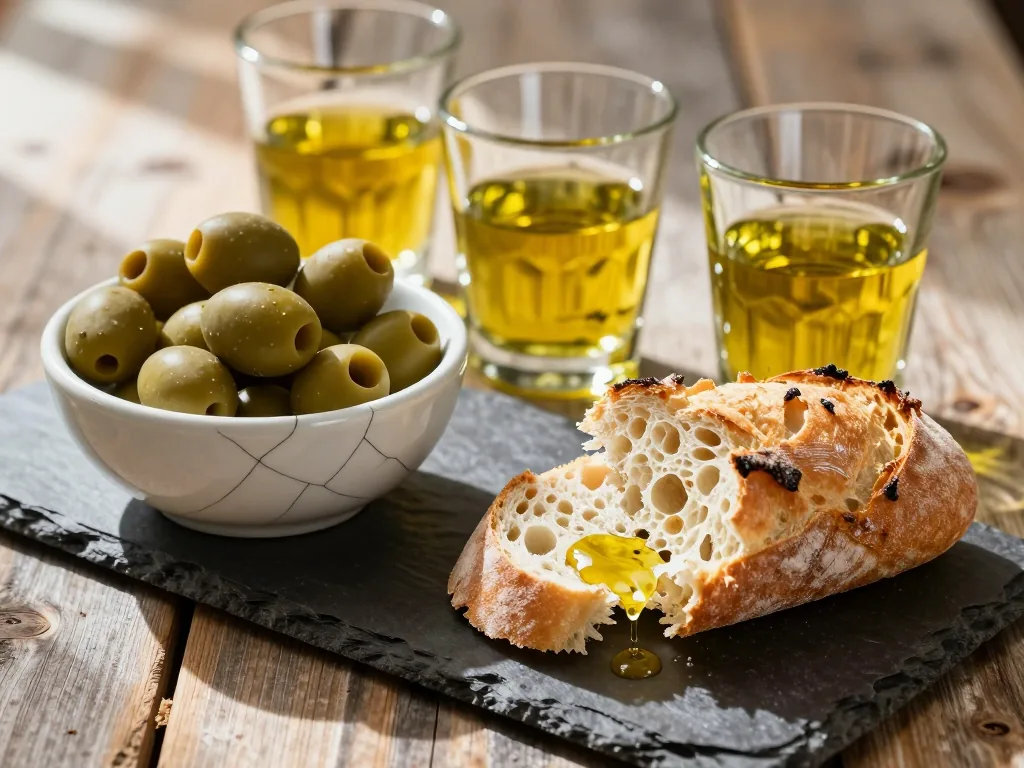
Spanish olive oil has never been more confusing—or more exciting—to buy. Shelves overflow with rustic glass jugs and sleek designer tins, while labels boast everything from “early harvest” to “estate-grown.” The average shopper squints at fine print, unsure which bottle actually delivers peak flavor. This guide cuts through the marketing haze with a practical, no-nonsense decoder for Spanish labels—from Protected Designation of Origin seals to acidity myths and harvest dates. By the end, you’ll know exactly how to spot a genuinely great bottle: one that tastes of sun-baked groves, not just a clever slogan. You’ll also know how to match it to your cooking and budget. Whether you’re drizzling it over toast or finishing a paella, your next purchase will be a confident one.
Why Spanish Olive Oil Dominates the World Market
The Scale of Production and Global Impact
Spain doesn’t just participate in the global olive oil trade—it drives it. Year after year, the country produces roughly 40 to 45 percent of the world’s total olive oil, a figure that becomes staggering when you realize no other nation comes close. Within Spain, Andalusia reigns as the undisputed powerhouse, contributing over 70 percent of national output, with Jaén and Córdoba serving as the epicenter of this liquid gold. Such immense scale creates a dual reality for consumers. At one end sit colossal, industrial-scale mills producing bulk commodity oil destined for supermarket blends across Europe and beyond. At the other, a thriving but smaller segment of artisanal producers crafts single-estate, cold-extracted oils with obsessive attention to terroir. Because both extremes share the same national origin label, “Spanish olive oil” tells you almost nothing about quality. This is precisely why mastering label literacy is no longer a luxury for foodies—it’s an essential skill for anyone who wants to avoid paying premium prices for what is essentially commodity-grade liquid.
The Regulatory Framework in 2026
Thankfully, you’re not navigating this landscape unarmed. The regulatory environment in 2026 is more robust than ever, designed to separate genuine quality from clever marketing. The cornerstone remains EU Regulation 2022/2104, significantly tightened with its 2026 updates. Enforced in Spain by the Ministry of Agriculture, Fisheries and Food (MAPA), this regulation dictates everything from the chemical parameters defining each quality grade to the mandatory origin statements on the front of the bottle. Under these rules, terms like “extra virgin” are legally protected; an oil cannot carry that label unless it meets strict free acidity limits (below 0.8%) and passes rigorous sensory analysis by a certified tasting panel. The 2026 updates also close loopholes regarding blend disclosure. If a bottle claims a specific Spanish region—say, “Picual from Sierra Mágina”—the olives must genuinely originate there, and the bottling facility must be traceable. These laws are your shield against false claims, ensuring that when a label says “cold extraction” or “single estate,” it’s not a whimsical suggestion but a verifiable, legally binding statement. Understanding this framework transforms you from a passive buyer into an informed inspector, using the label as a precise tool rather than a decorative afterthought.
Understanding the Three Official Quality Grades
Every bottle of Spanish olive oil—whether it’s a supermarket staple or a prized batch from a Jaén boutique mill—falls into a legally defined quality grade. These categories aren’t marketing spin; they’re set by EU regulations and enforced by Spanish authorities. Once you learn to read them, a pretty label won’t fool you again.
Extra Virgin Olive Oil (AOVE) sits at the top. To earn this title, the oil must have a free acidity no higher than 0.8% (as oleic acid) and, just as importantly, zero sensory defects. That second requirement is what truly separates the exceptional from the passable. A certified tasting panel must formally confirm the oil shows no flaws like rancidity, mustiness, or a winey-vinegary note. Production is purely mechanical: olives are crushed, malaxed, and centrifuged at ambient temperatures, with no heat, no chemical solvents, and no re-refining. This keeps the natural polyphenols—those bitter, peppery compounds tied to anti-inflammatory benefits—along with the fresh aromas of grass, tomato leaf, and almond. When a Spanish bottle says “AOVE” or “Extra Virgen,” you’re holding a natural fruit juice.
Virgin Olive Oil comes next. It’s also mechanically extracted, but its free acidity can reach 2%, and it may show minor sensory flaws—a slight fustiness or a hint of overripe fruit. It’s safe and often fine for cooking, yet it lacks the vibrancy of extra virgin. Below that is lampante oil, a technical grade so defective—high acidity, strong off-flavors—that it’s unfit for human consumption as-is. Lampante requires chemical refining, which strips away color, aroma, and flavor. Here’s where confusion creeps in: any bottle simply labeled “olive oil” (aceite de oliva) in Spain is almost always a blend of this refined lampante base with a small amount of virgin oil for a touch of color and taste. It’s neutral, cheap, and nutritionally hollow.
Watch out, too, for “mild” (suave) or “light” (ligero) on the packaging. These aren’t official grades—they’re marketing terms for refined blends. A “mild” oil is heavily processed to remove all pungency, which also strips most polyphenols and antioxidants. It often masks inferior raw material. The only reliable quality marker on any label is “extra virgin” (or “AOVE”); if it’s missing, the product has been chemically altered. In 2026, with Spanish extra virgin prices ranging from roughly €8 to €25 per liter depending on harvest and origin, spending a few euros more for the genuine grade is the single smartest investment you can make for your palate and your health.
Decoding the Label: What Must Appear in 2026
The era of cryptic, minimalist labels on Spanish olive oil is finished. With the latest EU labeling regulations now fully in force, the bottle in your hand functions as a legal document—one that rewards the attentive shopper. Knowing what to look for lets you sidestep mediocrity in under thirty seconds. Here’s your field guide to the mandatory elements that separate a genuinely great bottle from a merely pretty one.
Mandatory Harvest Date and Best Before
The most critical piece of information is now unmissable: the harvest year. Look for a two-part vintage like “2025/2026” or a simple “2026.” That tells you exactly when the olives were picked—the oil’s true birthdate. Next to it sits a best-before date, but don’t let its distance fool you. A bottle stamped with a best-before of late 2027 might still be past its prime if the olives were harvested two seasons ago. The rule of thumb: buy oils within 12 to 18 months of their harvest date. Inside that window, the oil keeps its signature aromas of fresh grass, tomato leaf, and almond, along with the desirable bitterness and peppery pungency that signal high polyphenol content. Older oils taste flat, muted, and increasingly rancid—even if they’re technically “safe” to eat.
Origin Labeling and PDO Designations
Every Spanish oil must now state its geographic origin, but the real shortcut to quality is the Protected Designation of Origin (PDO) seal. This isn’t a marketing sticker; it’s a legally enforced guarantee. Spot “Sierra Mágina,” “Priego de Córdoba,” or “Baena” from Andalusia, or “Les Garrigues” and “Siurana” from Catalonia, and you’re holding an oil grown, milled, and bottled within a strictly defined region, under rigorous sensory and chemical testing. Certified panels taste every PDO oil and reject it if defects appear. That’s your strongest signal of authenticity, and it also reveals character: Baena oils lean robust and bitter, while Les Garrigues runs elegant and fruity. When in doubt, pick a PDO; it’s rarely a mistake.
Packaging Clues
Finally, examine the container before you check the price. Dark glass bottles or opaque tins are non-negotiable for quality. Light is olive oil’s enemy, triggering oxidation that destroys delicate polyphenols and accelerates rancidity. A clear glass bottle, however beautiful on your countertop, is a red flag—the oil inside is already degrading under supermarket lighting. If you find a great oil in a dark bottle, expect to pay from €12 to €28 per 500ml for a premium harvest; anything less in a clear bottle is a gamble you shouldn’t take.
The Main Spanish Olive Varieties and Their Flavor Profiles
Spain grows over 260 olive varieties, yet only a handful show up in the bottles you’ll find on shelves. Learn these core cultivars and you’ll crack the code on any label—variety shapes flavor far more than any marketing buzzword. Here’s your practical cheat sheet.
Picual and Hojiblanca
Picual is the workhorse of Spanish olive oil. Grown mainly in Jaén, it hits with a bold, peppery kick that lingers at the back of the throat—a hallmark of its high polyphenol content. That robustness also means exceptional oxidative stability; Picual oils resist rancidity for up to two years. So it’s your go-to for frying, roasting, and any high-heat cooking. If you’re stocking up for the long haul, Picual is the safest bet you can buy. Hojiblanca, by contrast, is milder and more approachable—named for its white-leafed trees. Expect a grassy, green aroma with a clean, almond-like finish and a touch of sweetness. Because it’s less aggressive, Hojiblanca suits salads, grilled fish, or as a finishing oil where the olive character complements rather than overpowers.
Arbequina and Cornicabra
Arbequina conquered the world for good reason: it’s the ultimate crowd-pleaser. Tiny, round, and buttery, it brings a mild, fruity profile with notes of banana, apple, and a soft, nutty finish. There’s almost no bitterness or pepper, so it’s perfect for beginners or delicate dishes—vanilla ice cream, fresh cheese, lightly steamed vegetables. But that delicacy comes at a cost: it degrades quickly. Use it raw, and finish the bottle within six months. Cornicabra, mostly from Toledo, sits in the balanced middle. Its profile is harmonious—moderately bitter up front, gentle spice at the finish, with hints of green tomato and dried herbs. That equilibrium makes it an exceptional everyday oil: versatile for sautéing, yet flavorful enough to top a simple bean stew.
Empeltre and Lesser-Known Varieties
Empeltre, native to Aragon and the Balearic Islands, is the sweetest of the major Spanish varieties. Smooth, buttery, almost honeyed, it carries minimal bitterness and a soft, fruity aroma. That’s why Empeltre shows up so often in blends—it rounds out harsher oils and lends a silky mouthfeel. For pure pleasure, try it on bread with tomato. Beyond these four, Spain’s regional treasures reward exploration. Manzanilla, from the south, offers a delicate, camomile-like fragrance. Verdial, from Málaga, is rich and velvety with a gentle, nutty character. Royal, a rare find from the Sierra Mágina mountains, is intensely aromatic with notes of fig and artichoke. Seek out single-varietal bottles of these lesser-known cultivars, and you’ll expand your palate well beyond the supermarket standard—often at comparable prices, from €8 to €25 per 500 ml, depending on the producer and harvest year.
How to Taste and Evaluate Spanish Olive Oil Like a Pro
The Sensory Checklist
Forget swirling and spitting like a wine sommelier—olive oil demands a slower, more deliberate ritual. Pour about a tablespoon into a small glass, ideally one with a narrow rim to concentrate the aromas. Cup the glass in your palm for a minute or two; your body heat releases the volatile compounds that carry the oil’s personality. Then bring it to your nose and inhale deeply, not once but three times. A great Spanish oil—whether a Picual from Jaén or an Arbequina from Catalonia—should smell vibrantly green: fresh-cut grass, tomato leaf, ripe apple, or a hint of almond. These are the signatures of freshly harvested olives. Any scent of stale, metallic, or vinegary notes is a red flag.
Now take a small sip—just enough to coat your entire mouth. Don’t swallow immediately. Let it rest on your tongue for five seconds. Two sensations matter here: bitterness and pungency. Bitterness, which feels like a gentle astringency across the back of the tongue, comes from polyphenols—the same antioxidants that make olive oil healthy. Pungency is that distinct tickle or cough-inducing scratch at the back of your throat. Both are positive markers of a robust, freshly pressed oil. A good oil should feel smooth and silky, coating your palate like a light velvet. It should never feel greasy, waxy, or heavy—those textures indicate poor extraction or an oil past its prime.
Common Defects to Avoid
The most frequent defect is rancidity, which smells like old walnuts or putty and tastes flat and dull. Mustiness—a damp, cellar-like odor—comes from olives stored too long before pressing. A winey-vinegary flavor signals fermentation, often from bruised or overripe fruit left in piles. All three indicate careless processing or excessive aging. But beware of subtler failures: if an oil tastes soapy, waxy, or simply “nothing,” it has likely been refined or blended with low-quality, deodorized oils. True extra virgin olive oil—the only category worth buying—should never be neutral. For a genuinely great bottle, look for a harvest date (not just a best-before date) within the last 12 months, and expect to pay from €8 to €25 per 500 ml for a single-estate, cold-extracted Spanish extra virgin. Anything cheaper is probably not what it claims to be.
Practical Buying Guide for 2026
Where to Buy and What to Look For
Your best chance of finding a genuinely great Spanish olive oil in 2026 lies outside the supermarket aisle. Specialty importers, regional co-ops, and direct-to-consumer producers offer far greater transparency than mass-market retail, where blends often hide behind generic “extra virgin” claims. When you pick up a bottle, the first thing to hunt for is the harvest date—not a best-before date, but the actual year or month of milling. A high-quality oil from the 2025/2026 harvest will taste vibrant, grassy, and peppery; anything older than 18 months is likely flat or rancid. Next, check for a Protected Designation of Origin (PDO) seal—look for names like “Sierra Mágina,” “Baena,” or “Les Garrigues.” This guarantees the olives came from a specific region and were processed under strict quality controls. Finally, the variety name should be stated clearly, not buried in fine print. If you see “Picual,” “Arbequina,” “Hojiblanca,” or “Cornicabra” on the front label, you know the producer is proud of their product. If the label only says “extra virgin olive oil” with no further detail, put it back.
Price and Value Expectations
A genuinely good extra virgin Spanish olive oil in 2026 will cost more than generic blends, but price alone is not a guarantee. Compare harvest dates and sensory descriptions rather than relying on premium packaging.
Expect to pay anywhere from €9 to €18 per 500ml for a single-estate, PDO-certified bottle from a reputable co-op or specialty shop. Supermarket house brands may sit at €4 to €7 per 500ml, but they rarely offer the freshness or complexity you want. Conversely, don’t be seduced by €30 designer bottles with fancy ceramic decanters—the oil inside is often no better than a solid mid-range option. Instead, look for tasting notes on the label: words like “green almond,” “tomato leaf,” or “bitter finish” signal a fresh, polyphenol-rich oil, while vague terms like “delicate” or “smooth” often mean the oil has been filtered or aged past its prime.
Storage and Usage Tips
Once you’ve found your bottle, treat it well. Store it in a cool, dark cupboard away from the stove or any heat source—light and warmth are the enemies of olive oil. After opening, use it within three months; oxidation begins immediately, and the delicate aromatics fade fast. For raw finishes—drizzling over salads, soups, or crusty bread—choose a fruity Arbequina or a buttery Hojiblanca from the current harvest. For sautéing, roasting, or grilling, a peppery Picual is your ally; its high polyphenol content and robust structure hold up to heat without turning bitter. Match the oil to the dish, and you’ll taste the difference immediately.
Common Misconceptions and Marketing Traps
“Single Origin” vs. “Single Variety”
“Single origin” is one of the most misunderstood terms on Spanish olive oil labels. It sounds precise, yet it only means the olives came from one geographical area—Jaén, say, or Sierra Mágina. That region might hold dozens of olive varieties, and the oil inside could be a blend of several, chosen for commercial consistency rather than flavor clarity. For a truly defined taste, look for “monovarietal” or “single variety.” That claim is stricter: the oil must come from one cultivar, like Picual, Arbequina, or Hojiblanca. A monovarietal delivers a predictable profile—peppery and bitter for Picual, buttery and mild for Arbequina—whereas a “single origin” blend can taste like anything, depending on the mill’s mix.
“Cold Extracted” and Other Buzzwords
In 2026, supermarket shelves shout “cold extracted,” “first press,” and “artisanal.” Here’s the reality: cold extraction isn’t a premium feature; it’s the legal baseline for every extra virgin olive oil in Spain. The term just means the paste wasn’t heated to a point that would degrade quality, and it’s mandatory for the grade. “First press” is a historical relic—modern mills use centrifugal decanters, not presses, so the phrase carries no real meaning. And “artisanal” is unregulated; anyone can print it. Skip the buzzwords and flip the bottle over. Check two things: the legal grade (must read “Extra Virgin Olive Oil” or “Aceite de Oliva Virgen Extra”) and the harvest date. No harvest date? Treat the bottle with suspicion—it’s likely old stock.
The Myth of “No Acidity” on the Label
A label boasting “0.2% acidity” might look like a mark of excellence, but it’s often misread. Acidity is measured in a lab, not claimed by the producer—it’s a chemical fact, not a marketing choice. A low number means the olives were healthy and harvested promptly, which is good. But it says nothing about taste. Sensory testing—smell and flavor—matters far more. A low-acid oil can still be flawed if it was poorly stored, over-milled, or exposed to oxygen. You might find a 0.2% oil that tastes rancid and a 0.4% one that’s vibrant and grassy. Treat acidity as informational, not conclusive. The real test is in your mouth: a great Spanish oil should taste fresh, with slight bitterness and a peppery finish that lingers at the back of your throat. Flat, metallic, or old-nut flavors? Put it back, no matter what the label claims.
Advanced Considerations for Enthusiasts
Once you’ve mastered the basics of label-reading, the real pleasure begins. Choosing a great Spanish olive oil in 2026 isn’t just about avoiding a bad bottle; it’s about finding the one that sings with your cooking and your palate.
Pairing Spanish Oils with Food
Think of your oil as a finishing ingredient, not just a fat. A robust Picual, with its assertive bitterness and peppery finish, is a natural partner for grilled lamb chops, slow-braised oxtail, or a hearty lentil stew—it stands up to smoke and spice without disappearing. Conversely, a delicate Arbequina, prized for its buttery, almost almond-like sweetness, is wasted on a roaring barbecue. Use it where its subtlety shines: drizzled over poached white fish, folded into a simple aioli, or even spooned over vanilla ice cream with a pinch of sea salt for a surprisingly sophisticated dessert. In between sits Hojiblanca, whose grassy, slightly nutty profile makes it the ultimate all-rounder. It’s superb on a classic Spanish tomato bread (pan con tomate), over a crisp green salad with sherry vinegar, or as a dipping oil for a crusty sourdough. Don’t overlook regional traditions—Andalusian kitchens often reach for a fruity Picual to finish fried fish, while Catalans favour Arbequina for calçots and escudella. Let these local habits guide your own experiments.
Understanding Harvest Seasons and Vintage Variation
Unlike wine, olive oil is a fresh juice, and the 2025/2026 harvest is a direct reflection of last autumn’s weather. Prolonged drought in parts of Andalusia has produced oils with intense concentration, while cooler, wetter pockets in Catalonia have yielded softer, more floral expressions. The single biggest variable, however, is harvest timing. Early-harvest oils (pressed in October or November from green olives) are vibrant, grassy, and aggressively bitter and pungent—they’re the ones that make you cough. Late-harvest oils (December onwards) come from riper, darker olives, offering a golden hue and a sweet, buttery, almost tropical character. Neither is “better,” but knowing the difference is key. If you love a peppery kick on a finishing salad, seek out an early harvest or noviembre note on the label. If you prefer a smooth, mellow oil for dipping bread or baking, a late-harvest bottle is your match. Buy small bottles of both and taste them side-by-side; your preference will become obvious.
Sustainability and Small-Producer Certifications
Beyond the PDO (Protected Designation of Origin), look for the EU organic leaf logo, which guarantees no synthetic pesticides or herbicides. Some growers also follow “integrated production” standards—a middle ground that minimises chemical use and promotes biodiversity, though it’s less strictly regulated. The most rewarding route, however, is to bypass mass-market brands entirely. Many small producers in regions like Jaén, Teruel, or the Sierra de Gádor offer single-estate oils with remarkable traceability. Contact them directly. A quick email or a visit to their farm—many host tastings—lets you verify their claims about traditional stone-milling or hand-harvesting. Expect to pay from €15 to €35 per 500ml bottle for a truly artisanal, certified-organic Spanish oil in 2026. That price buys you not just flavour, but a direct connection to the land and the people who tend it.
Conclusion
The secret to a truly exceptional Spanish olive oil isn’t the price or the prettiest bottle—it’s the story encoded on the label. The PDO, the harvest date, the variety, and the extraction method: these four signposts tell you everything. Learn to read them, and you’ve already outsmarted 90% of supermarket shoppers, unlocking a world of peppery, grassy, and buttery oils that shift with every season.
Your next step is simple. Pick one bottle from a single-estate PDO—think Jaén, Priorat, or Sierra Mágina—with a 2025 or 2026 harvest date. Taste it side by side with a generic “extra virgin,” and let your palate confirm what the label promised.
From there, buy small. Store it away from light and heat. Make that bottle your new kitchen benchmark. Because in 2026, great Spanish olive oil isn’t a luxury—it’s a decision you make every time you pour.