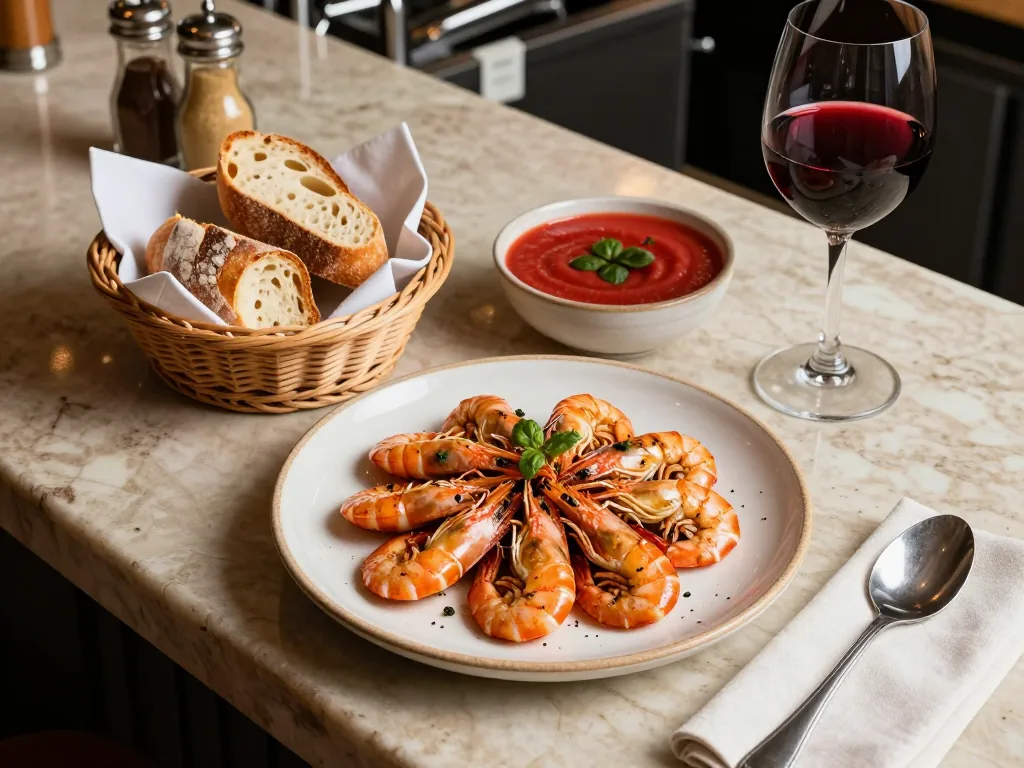
Imagine stepping into a bustling Madrid tapas bar. The air is thick with sizzling garlic and smoked paprika. Then the waiter rattles off a list of dishes you can’t quite decipher. You nod, smile, and end up with a plate of something you never intended—perhaps boiled octopus when you craved crispy croquettes. By 2026, Spain’s culinary scene fuses tradition with avant-garde flair. The gap between what you order and what you actually want has never been wider. This guide hands you the 47 essential Spanish food words—from entrantes to postres, plus the sneaky adjectives that change everything. Navigate any menu with confidence, dodge tourist-trap mistakes, and order like a local from the very first bite.
The Absolute Core: Nouns You Will See on Every Menu
Walk into any bar, mesón, or fine-dining spot in Spain, and you will be confronted by the same foundational vocabulary. Master these nouns, and you will never again stare blankly at a chalkboard. The protein section splits into three distinct worlds: carne (meat), pescado (fish), and marisco (shellfish). Under carne, expect pollo (chicken), cerdo (pork), ternera (beef), and cordero (lamb). Pork is the undisputed king of Spanish cuisine—from jamón to secreto ibérico—so knowing cerdo will save you from accidentally ordering a lamb stew when you wanted a pork cheek. For pescado, the big three are merluza (hake), bacalao (cod), and boquerones (anchovies). Merluza is the white fish of choice, often grilled or in a green sauce; bacalao appears salted and rehydrated; boquerones are usually vinegar-cured or fried—never confuse them with the larger, saltier anchoas. For marisco, you will see gambas (shrimp), mejillones (mussels), and calamares (squid). Gambas are often served al ajillo (with garlic) or a la plancha (grilled). Calamares can mean whole fried squid rings or, in Madrid, the iconic bocata de calamares.
On the side, the universal trinity is patatas (potatoes), arroz (rice), and pan (bread). Patatas appear as patatas bravas, tortilla de patatas, or simply fried. Arroz is the base of paella and arroz negro. Do not forget verduras (vegetables) and setas (wild mushrooms), which dominate autumn menus. A plate of setas a la plancha with garlic is a vegetarian’s best friend.
The Hidden Danger: False Friends and Lookalikes
The real trap is not unknown words—it is words that look familiar. “Carpeta” (folder) and “embarazada” (pregnant) rarely appear on menus, but two pairs will trip you up daily. Aceite (oil) versus acelga (chard): ask for pan con aceite and you get olive oil-drenched bread; ask for pan con acelga and you get chard on bread. Similarly, sal (salt) versus salsa (sauce): pescado a la sal is fish baked in a salt crust, while pescado con salsa comes slathered in something else entirely. The rule of thumb is to check the second letter. Aceite and acelga differ only in the third letter; sal and salsa differ in the final syllable. Slow down, read the word twice, and when in doubt, point and ask, “¿Esto es…?” You will avoid the classic mistake of ordering a side of chard when you wanted olive oil for your bread—a small error, but one that marks you as a tourist in an instant.
Ordering Like a Local: The Essential Verbs and Phrases
Forget memorizing entire menu translations. In Spain, the fastest way to sound like you belong is to master a handful of high-frequency verbs and the rhythm of how orders actually happen. You don’t need perfect grammar; you need the right structure. The good news? The Spanish waiter’s script is remarkably predictable once you know the cues.
The Three Verbs That Cover 90% of Orders
First, querer (to want). In practice, you’ll rarely use the blunt “Quiero…” (I want…). Instead, the conditional “Quisiera…” (I would like…) is your golden ticket—polite without being stuffy, and it works for everything from a coffee to a full meal. Second, poner (to put/place), used almost exclusively as “Póngame…” (Put me down for… / Give me…). This is the waiter’s favorite: “Póngame una caña” (Give me a small draft beer) sounds instantly native. Third, traer (to bring). Use “¿Me trae…?” (Will you bring me…?) when you need something extra, like bread or another drink. It’s a question, but understood as a gentle request.
Politeness and Getting Attention Without Being Rude
Spaniards don’t wave frantically or shout. To get a waiter’s attention, make eye contact and raise your index finger slightly, or say “Perdona” (excuse me, informal) or “Perdone” (formal) as they pass. Never snap your fingers. When you’re ready to order, the magic phrase is “Para mí…” (For me…), followed by the dish. This signals you’re ready and avoids the awkward pause when the waiter asks, “¿Qué le pongo?” (What can I get you?).
“Quisiera…” (I would like…) is softer than “Quiero…” (I want…). For the waiter, use “Perdona” (excuse me, informal) or “Perdone” (formal). To order, simply say “Para mí…” (For me…) followed by the dish name.
A few extra phrases round out your toolkit. “¿Qué nos recomienda?” (What do you recommend?) lets the house shine. Sharing? Say “Para compartir” (to share). Done? “La cuenta, por favor” (The bill, please)—not “factura,” which is for formal invoices. On a quick tapas crawl, you’ll often order standing at the bar; just point and say “Uno de esos” (one of those). With these verbs and phrases, you’ll navigate any menu—from a humble bar to a modern taberna—with confidence and a smile.
The Menu Structure: Decoding Tapas, Raciones, and Menú del Día
Walking into a Spanish restaurant without understanding the portion system is like assembling furniture without the diagram—you’ll get something, but not what you intended. The traditional bar-top hierarchy remains intact in 2026, and knowing the difference between a tapa, a ración, and a pincho saves you money and embarrassment. Here’s how to read the room (and the menu).
Tapas vs. Raciones vs. Pinchos: What’s the Difference in 2026?
Start with the smallest. A tapa is a single bite or small plate, often free with your first drink in southern Spain—though in tourist-heavy Madrid or Barcelona, expect to pay €2 to €5 per tapa. It’s a snack, not a meal. A pincho (or pintxo in the Basque Country) is similar but skewered to bread; you order by pointing at the counter, paying per piece (€2.50 to €4 each). Now the game-changer: a media ración is half a portion—ideal for two sharing a starter or one person wanting variety without overcommitting. Prices run €6 to €12, with seafood and Iberian pork costing more. A full ración is a generous plate for one very hungry person or two as a light main; expect €10 to €20. Golden rule: order one ración or two medias per person, then add tapas as you go. You can always order more, but you can’t un-eat a mountain of patatas bravas.
The Menú del Día: The Best Value and How to Navigate It
For budget-friendly local eating, the menú del día is your secret weapon—strictly a weekday lunch affair (Monday to Friday, usually 1:30 PM to 4:00 PM). For a fixed €12 to €18 per person, you get two courses, dessert (or coffee), and a drink (water, wine, or beer). The catch? The menu is handwritten on a chalkboard or single printed sheet, often Spanish only. Don’t panic. Point at the first course, then the second, say “para mí” (for me), and done. The first course is lighter—salads, soups, or vegetables—while the second features meat or fish. Pro tip: the menú del día isn’t about choice; it’s about what the chef bought that morning. See merluza (hake) or cocido (stew)? That’s the real deal. Skip tourist-trap laminated menus and eat where the workers eat; that guarantees freshness and value.
The Preparation Methods: How Your Food Is Cooked
Walk into any Spanish restaurant, and the menu reads like a verb list before you hit a noun. The cooking method isn’t a footnote—it’s the headline. Ordering well means knowing what you’re signing up for, because the same cut of fish or meat transforms completely depending on whether it hits a flat-top grill, a deep fryer, or a charcoal fire.
Grilled, Fried, and Roasted: The Most Common Terms
Master a la plancha first. That’s grilled on a flat top—the workhorse of Spanish cooking. Think squid, sea bass, or pork loin seared on a sizzling metal plate with just olive oil and salt. It’s clean, fast, and lets the ingredient speak. You’ll spot it everywhere, from beachside chiringuitos to Madrid’s oldest taverns.
For more smoke, look for a la brasa (charcoal-grilled) or a la parrilla (barbecue grill). The difference matters. A la brasa cooks over glowing embers, giving a deep, smoky crust—perfect for lamb chops or chicken. A la parrilla uses the open grill grate, often for thicker cuts like chuletón (ribeye), where you want a charred exterior and rare center. Both are heartier, pricier options, typically €18 to €35 per main course in 2026.
Frito (fried) doesn’t mean soggy. Spaniards fry with precision—light, crisp, never greasy. The famous fritura is a mixed fried seafood platter (anchovies, squid, tiny fish) that arrives golden and crackling. Asado (roasted) and al horno (baked in the oven) are your go-to for slow-cooked meats like suckling pig or lamb, often listed as “cochinillo asado” or “cordero al horno.” These are Sunday-lunch dishes, rich and falling off the bone.
Sauces and Sides That Change the Dish Entirely
The method sets the base; the sauce flips the script. Guisado (stewed) means the protein cooked low and slow in a liquid—often wine, tomato, or broth—yielding tender, saucy bites. En salsa (in sauce) is similar but more specific: the dish arrives bathed in a particular preparation, like salsa verde (green garlic-parsley sauce) or salsa de almendras (almond sauce). A simple grilled fish becomes a completely different meal when you order it “en salsa” versus “a la plancha.”
Order smart. Want the pure flavor of the sea? Stick to a la plancha. Craving comfort and depth? Go guisado or en salsa. And if you see “frito” next to a seafood dish at a coastal spot, trust it—that’s the local move.
Dietary Restrictions and Allergies: How to Stay Safe in 2026
Spain’s food culture is deeply social. In 2026, most waitstaff in tourist-heavy areas speak enough English to get by—but when your health is on the line, you need precision, not guesswork. Master this sentence: “Soy alérgico/a a…” (soy ah-LEHR-hee-koh/ah ah…), meaning “I am allergic to…”. Fill in the blank with gluten (gluten), frutos secos (FROO-tohs SEH-kohs – tree nuts, including almonds and walnuts), marisco (mah-REES-koh – shellfish), or lactosa (lahk-TOH-sah – lactose). The gender ending matters: use alérgico if you’re male, alérgica if female. For a serious allergy, add “¿Puede confirmar con el cocinero?” (can you confirm with the chef?). Tapas bars often fry everything in the same oil, so cross-contamination is a real risk. Many Madrid and Barcelona menus now print allergen icons, but smaller villages still rely on word of mouth.
For vegetarians, “¿Tiene alguna opción vegetariana?” (does it have any vegetarian option?) is your lifeline. Note that Spanish vegetariano often still includes fish—so if you’re strict, clarify: “Sin carne y sin pescado” (without meat and without fish). Vegans face a bigger challenge: “Soy vegano/a, sin carne, sin pescado, sin lácteos, sin huevos” (I’m vegan, without meat, without fish, without dairy, without eggs). Expect to repeat this slowly. Many traditional dishes like croquetas contain béchamel (milk) and ham, and even patatas bravas may be fried in shared oil. Pescatarians should say “Solo como pescado y marisco, no carne” (I only eat fish and shellfish, no meat)—and double-check that jamón isn’t hiding in your salad or fabada.
“Soy alérgico/a a…” (I am allergic to…) – fill in: gluten, frutos secos (nuts), marisco (shellfish), lactosa (lactose). For vegetarians: “¿Tiene alguna opción vegetariana?” For vegans: “Soy vegano/a, sin carne, sin pescado, sin lácteos, sin huevos.”
Finally, carry a printed or phone-based allergy card in Spanish. Even if your pronunciation is perfect, showing it visually removes all doubt. In 2026, most smartphones can translate live, but a written card avoids Wi-Fi dependency mid-meal. And never assume “sin” (without) means safe: always ask “¿Lleva…?” (does it contain…?) before ordering. One extra question can save you a ruined evening—or worse.
The Regional Specialties: What to Order Where
Spain isn’t one cuisine but a patchwork of fiercely proud culinary regions. Ordering blind can lead to disappointment—or at least to a plate of something you didn’t expect. In the north, the Atlantic coast defines the table. In San Sebastián and Bilbao, you’ll be standing at a bar pointing at pintxos—skewered bites of everything from grilled shrimp to mushroom and Idiazabal cheese. Just say “ese pintxo, por favor” (that one, please). Further west, Galicia demands pulpo a la gallega: tender octopus slices dusted with smoked paprika and coarse salt, best with a crisp Albariño. In Asturias, the heavy hitter is fabada, a slow-cooked bean stew loaded with chorizo, morcilla, and pork belly. Order it for lunch, not a light snack.
Drop to the south, and the frying pans come out. In Andalusia, pescaíto frito (mixed fried fish) is a way of life, served with lemon and a cold beer. In Córdoba, skip the watery gazpacho and ask for salmorejo—a thicker, creamier tomato-and-bread purée crowned with slivers of jamón and hard-boiled egg. And that ham: jamón ibérico is not just a topping but a centerpiece. Order it sliced thin, and expect to pay from €15 to €40 per 100 grams depending on the acorn-fed quality. Pair it with a dry fino or manzanilla sherry from Jerez, which cuts the fat beautifully.
Head east to Valencia, and the paella question gets tricky. Locals will tell you that authentic paella is made with rabbit, chicken, or vegetables—not mixed seafood. If you want seafood, ask for paella de marisco on the coast; otherwise, order paella de pollo or de verduras. Prices run from €12 to €25 per person. Finally, in Madrid and Castilla, go for the gut-warmers: cocido madrileño (a chickpea, meat, and vegetable stew served in three courses), callos (spicy tripe stew), and the eternal tortilla española—the thick potato omelet that every bar claims to make best. Say “tortilla de patatas” and specify whether you want it jugosa (runny) or bien cuajada (fully set).
The Unwritten Rules of Spanish Dining Etiquette in 2026
When to Eat, How to Pay, and the Art of the Sobremesa
Your first cultural shock won’t be the food—it’s the clock. In 2026, lunch remains the undisputed heavyweight, typically served from 2:00 PM to 4:00 PM. This isn’t a quick sandwich break; it’s a full multi-course affair. Dinner, by contrast, is lighter and later—rarely before 8:30 PM, often rolling into action at 9:30 PM. Show up at 7:00 PM expecting a full kitchen, and you’ll likely find only pre-dinner tapas or a closed door. The true local ritual is the sobremesa: the unhurried time spent lingering after the plates are cleared, talking, digesting, and letting the conversation stretch for another hour. Don’t rush this. Asking for the bill the second you finish your coffee is brusque. Instead, wait until the server catches your eye, then make a subtle writing gesture in the air.
The Bread, the Water, and the “Cubierto” Charge
Now, the fine print. In most Spanish restaurants, bread isn’t a complimentary gift—it’s an automatic addition. You’ll see “pan” on your bill, usually ranging from €1.50 to €3.00 per basket, whether you touched it or not. You can decline it upfront by saying “sin pan, por favor,” but be aware the charge often appears regardless. Tap water is another trap. You must explicitly request “agua del grifo.” Otherwise, you’ll get a bottle of still or sparkling water, costing €2.00 to €4.50 per 500ml bottle. Finally, look for the cubierto—a small cover charge for table service, cutlery, and the bread plate. It typically runs €1.00 to €2.50 per person and is perfectly legal and standard. As for tipping, Spain is refreshingly relaxed: it’s optional, and locals simply round up to the nearest euro or leave a coin or two. A 10% tip is generous, not expected. Just remember: you’re paying for the experience, the time, and the sobremesa—not for a server to hover.
The 2026 Digital Shift: QR Menus, Apps, and Ordering Tech
By 2026, the paper menu hasn’t vanished from Spain—it’s just hiding. In Madrid, Barcelona, and even smaller coastal towns, the first thing your server will do after seating you is point to a small black-and-white square on the table. “Escanea el código QR,” they’ll say, and you’ll be expected to pull out your phone. This isn’t a trend; it’s the default. Most mid-range and casual restaurants now operate entirely through a “carta digital,” a digital menu that loads in your browser—no app download required. You’ll tap through categories like “entrantes” (starters), “principales” (mains), and “postres” (desserts), and when you’re ready, hit “añadir al pedido” to add items to your virtual basket. Then, you’ll press “pedir” (to order), and the kitchen receives it instantly. It sounds slick, but the real skill is handling the moment tech fails—because it will.
Your phone’s camera can translate the entire menu instantly using Google Lens or Apple’s Live Text, but that only works with a signal. So before you panic, remember this: Spanish law still requires every restaurant to offer a physical menu. If the QR code is dead, the Wi-Fi is down, or the page won’t load, simply smile and say, “¿Me trae la carta en papel, por favor?”—ask for the paper menu. It’s legally binding, and they will bring it. The trick is to ask confidently, not apologetically. Many locals do the same when their battery hits 5%.
When you’ve finished, don’t hunt for a button on the app. In Spain, you still ask your server directly: “La cuenta, por favor” (the bill, please). Some apps will show a “solicitar cuenta” option, but it’s often ignored. And if you’re worried about tipping—don’t. Service is included in most places, and a small round-up of €0.50 to €2 per person is plenty, though never expected. As for prices on those digital menus: expect a standard main course to run from €12 to €22, and a menu del día (fixed lunch menu) from €14 to €18, depending on the city and restaurant tier. The digital shift has made ordering faster, but the human touch—asking for the paper menu or the bill by voice—still rules the room. Master those two phrases, and you’ll navigate 2026 Spain like a local, QR or no QR.
Conclusion
Mastering these 47 essential food words turns a guessing game into a confident cultural exchange, whether you’re deciphering a chalkboard menu in Seville or asking for la cuenta in Barcelona. You don’t need fluency—just the right vocabulary to avoid ordering callos when you wanted calamares, and to communicate allergies or preferences with ease. As you pack for your 2026 trip, save this list on your phone and practice the top ten phrases aloud before you land. At your first tapas bar, start with “¿Qué me recomienda?” and watch how a little local language unlocks a far richer meal. Next, highlight the five dishes you’re most curious about and commit to ordering them in Spanish, not English, from day one.