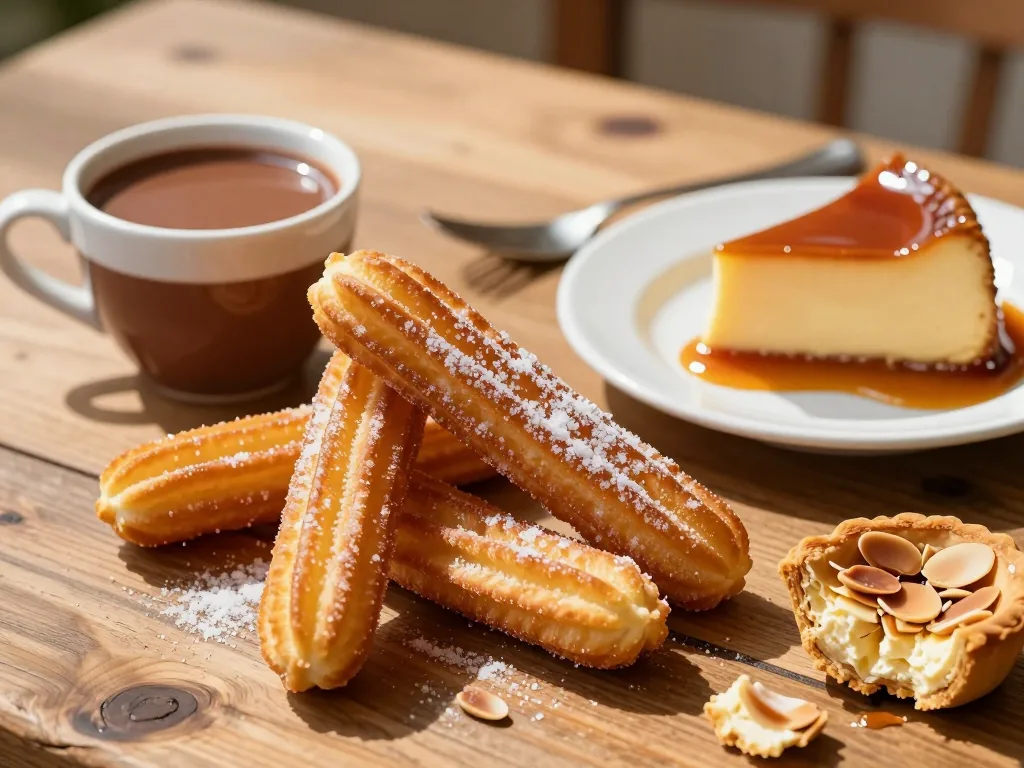
Spain’s dessert table is a living museum: Moorish almond pastries, convent-baked egg yolks, sun-warmed olive oil cakes. Yet most visitors only ever taste churros. As we step into 2026, the country’s sweetest traditions are undergoing a renaissance. Artisan bakeries are reviving recipes that have survived centuries of shifting borders and tastes. This guide cuts through the tourist-trap menus to bring you the 20 non-negotiable Spanish desserts. You’ll find saffron-kissed rice puddings from Asturias, honey-drenched fritters from Andalusia, and everything in between. For each treat, you’ll learn what it is, where to find the most authentic version, and the one local secret that makes every bite taste better. By the end, you’ll hold a definitive, eat-now list—one that turns any Spanish trip, or your own kitchen, into a sugar-dusted adventure.
The Essential Classics Every Beginner Should Know
What Makes a Dessert “Traditional” in Spain
Simple, pantry-based ingredients—almonds, honey, eggs, milk, sugar, and olive oil—define traditional Spanish desserts, along with techniques passed down through generations. Spanish sweets lean on rustic textures and intense, natural flavors, a sharp contrast to French patisserie or Italian gelato, and they’re deeply tied to religious holidays and local harvests. Forget elaborate layered mousses or gold leaf; here you’ll find cinnamon-dusted rice puddings, olive-oil cakes, and almond pastes that taste of the land. Many recipes began in convents, where nuns turned egg yolks—leftover from clarifying wine—into rich, dense confections. Others connect to specific fiestas, like buñuelos during Lent or roscones on Three Kings’ Day. Even in 2026, artisan pastry shops across Spain honor these roots, often stone-grinding almonds and using raw honey from regional apiaries, keeping the flavors strikingly honest.
The Big Three: Churros, Crema Catalana, and Turrón
Start with these three if you try nothing else. Churros with thick hot chocolate are a Madrid institution, best savored at dawn or after midnight. The churro itself is simple—fried dough of flour, water, and salt—but the dipping chocolate is the real magic: a dense, almost pudding-like cup of dark cocoa and cornstarch. In a classic churrería, a portion of six churros with chocolate costs from €4 to €7. Crema catalana, with its burnt sugar crust, is Catalonia’s take on crème brûlée, traditionally served on March 19 for Saint Joseph’s Day. Lemon zest and cinnamon infuse the custard, and many modern tapas bars torch it tableside; expect to pay from €5 to €9 per ramekin. Then there’s turrón, the almond-honey nougat from Alicante—a Christmas staple, though specialty shops carry it year-round. The hard version (turrón de Alicante) offers crunchy whole toasted almonds, while soft turrón de Jijona is a smooth, almost buttery paste. Both boast a Protected Designation of Origin, and a 300-gram bar runs from €8 to €15, depending on almond quality and artisan production. These three alone offer a crash course in Spain’s sweet soul: fried, creamy, and nutty.
Regional Icons and Their Protected Origins
Tarta de Santiago and the Galician Almond Tradition
No journey through Spain’s dessert landscape is complete without the flourless almond cake that has become the edible emblem of Galicia. Tarta de Santiago—dusty with powdered sugar and branded with the crimson Cross of Saint James—is a pilgrimage-worthy treat in the most literal sense. While the last Jacobean Holy Year fell in 2022, the cake’s momentum has not waned; in 2026, it is a permanent fixture in every Santiago de Compostela bakery, from the tourist-lined Rúa do Vilar to the tucked-away pastelerías of the old town. The finest versions achieve a moist, dense crumb that yields easily but never crumbles into dust, with a pronounced almond aroma that lingers after each bite. That depth of flavor comes down to the nut: seek out tarts made with Marcona almonds, the round, buttery variety grown in eastern Spain, which impart a natural sweetness and a tender texture that standard Valencia almonds cannot replicate. A good slice should taste faintly of lemon zest and cinnamon, with the sugar crust cracking lightly under your fork. Expect to pay anywhere from €3.50 to €6.50 per slice in a café, or €18 to €28 for a whole 20-centimeter cake from a reputable bakery.
Turrón’s PDO and the Town of Jijona
If Tarta de Santiago is Galicia’s sacred cow, turrón is the crown jewel of Alicante’s inland hills—and its protection is legally binding. The Protected Designation of Origin for turrón de Jijona is far more than a marketing sticker; it dictates the exact ratio of almonds to honey, the speed and temperature of the grinding process, and even a mandatory aging period before the nougat can be sold. In 2026, the town of Jijona (officially Xixona) remains the epicenter of this craft, where traditional stone mills—some centuries old—still slowly crush toasted Marcona almonds into a paste that emulsifies with honey into a glossy, almost liquid mass. Visiting the town’s artisan workshops offers a sensory education: you can watch the molino grind, then taste the dramatic contrast between the two protected styles. Turrón de Alicante is hard, brittle, and studded with whole almonds, snapping cleanly with a honeyed crunch; turrón de Jijona is soft, oily, and fudgy, spreading like a dense butter across your palate. The difference is not texture alone—it is technique, humidity, and patience. A 300-gram tablet of PDO turrón de Jijona typically ranges from €8 to €15 in local shops, while premium single-estate almond versions can reach €20. For the full experience, buy it directly from a Jijona co-operative, where the 2026 batch will reflect a year of careful almond harvests.
The Ubiquitous Custards and Puddings
If one category defines the Spanish sweet tooth in 2026, it’s the humble, silky custard. These aren’t fussy plated desserts; they’re the country’s daily rhythm, found in every home, bar, and restaurant from Galicia to Andalusia. They reflect a deep preference for simple ingredients—eggs, milk, sugar—turned transcendent through patience and technique.
Flan: The Nation’s Favorite Comfort Dessert
Walk into nearly any Spanish restaurant in 2026, whether a no-frills workers’ bar serving a menú del día or a Michelin-starred dining room, and flan will almost certainly be waiting. It’s the default, the safe choice, the dessert that never disappoints. The classic version is deceptively simple: eggs, whole milk, and sugar, baked gently in a water bath (baño María) over a lining of dark, bitter caramel. The result should wobble like jelly when you tap the plate, with a glossy, bittersweet sauce pooling around it. What makes it exciting in 2026, though, are the regional and chef-driven twists. In Valencia, you’ll often catch a whisper of orange zest in the eggs; in the north, a shot of coffee or a splash of aged rum is common. For the home cook, mastering the water bath is non-negotiable—low, slow heat is the only way to avoid a rubbery texture. Expect to pay anywhere from €3.50 to €9 per serving in a restaurant, depending on whether you’re at a corner counter or a white-tablecloth establishment.
Leche Frita: A Northern Home-Style Treasure
Never let the name put you off. “Fried milk” sounds like a kitchen accident, yet in Cantabria and Castilla y León, it’s a cherished childhood memory and a testament to rustic ingenuity. The process is straightforward: milk simmers slowly with flour and sugar until it thickens into a dense, porridge-like paste. That’s poured into a shallow dish and chilled until firm enough to cut into neat, thick squares. Each square is dredged in beaten egg and flour, then pan-fried in olive oil until the exterior turns golden and crisp, while the inside goes molten and creamy. The final flourish? A generous dusting of ground cinnamon and granulated sugar. In 2026, leche frita remains stubbornly home-style and regional—you’ll rarely spot it on tourist-heavy menus in Madrid or Barcelona. To taste it authentically, you must travel to the small towns of the north, where a portion of three or four pieces costs between €4 and €7. Alternatively, it’s a supremely rewarding project for the home kitchen, offering a texture entirely unique: a crackling shell giving way to a warm, sweet, comforting heart.
The Christmas Sweets That Define the Season
Polvorones and Mantecados: Andalusia’s Crumbly Shortbreads
No Spanish Christmas table is complete without a plate of polvorones or mantecados. These pale, powdery cookies dissolve the moment they touch your tongue. They appear in every supermarket from November onward, but the true epicenter of production is Estepa, a whitewashed town in Seville province. There, bakeries have perfected these recipes for centuries. Under a Protected Geographical Indication, Estepa’s producers churn out millions of these delicate rounds year-round. The magic peaks in December. Polvorones are the lighter, more aromatic cousin, scented with cinnamon and lemon zest. Mantecados rely on manteca de cerdo (pork lard) to achieve their signature sandy crumble. In 2026, you’ll spot them in cheerful, colorful tins at every corner shop. For the real experience, order directly from Estepa’s artisan bakeries—many ship nationwide, and a box of a dozen assorted pieces costs from €8 to €15 per tin. The freshest, still slightly warm from the oven, are worth the detour if you’re driving through Andalusia in December.
Beyond Turrón: Other Holiday Nougats and Marzipans
Turrón—the dense almond nougat from Alicante—gets all the glory. But the Spanish holiday sweets repertoire runs far deeper. Seek out guirlache, a lesser-known but utterly addictive brittle made by caramelizing sugar with whole toasted almonds until it shatters into glossy, golden shards. It’s crunchier and less sweet than turrón, with a deep, almost smoky caramel flavor that pairs brilliantly with coffee. Then there’s the marzipan from Toledo, where convents and artisan workshops have shaped the almond-paste mixture into lifelike fruits, tiny pigs, and coiled serpents for over five centuries. These figurines, painted with food coloring and finished with a glossy sheen, are as much edible art as they are confection. While these sweets are traditionally reserved for the Christmas table, the best artisan shops in Toledo and Madrid now craft them year-round for curious travelers. A 250-gram box of mixed marzipan figures runs from €10 to €18 per box. Guirlache bars sell for roughly €4 to €7 per 100-gram piece. In 2026, don’t just grab the turrón—ask for the brittle and the pig-shaped marzipan, and you’ll taste a side of Spanish Christmas that most visitors never discover.
Street Food and Café Culture Desserts
Churros and Porras: The Morning and Midnight Ritual
No trip through Spanish desserts is complete without confronting the glorious paradox of churros: a snack that is somehow both a late-night club exit essential and a dawn market worker’s fuel. The classic churro is thin, ridged, and shatteringly crisp, while its lesser-known sibling, the porra, is a thick, soft, pillow-like log of fried dough—both made from a simple flour-water paste and fried until golden. The ritual is non-negotiable: you must dip them, immediately and generously, into a cup of thick, pudding-like hot chocolate that is closer to molten dark chocolate ganache than any drink. In 2026, Madrid’s oldest documented churrería, operating continuously since 1894, still draws crowds for its century-old recipe, but every neighborhood in every city guards its own beloved spot—look for the queue spilling onto the pavement at 7 a.m. or 1 a.m. Prices remain democratic, from €3 to €6 per portion (six to eight churros or two porras) with a chocolate cup. The key is to eat them within ninety seconds of frying; any delay turns the crisp shell into a sad, oily sponge.
Torrijas: The Semana Santa French Toast
Torrijas are Spain’s answer to French toast, but they are so much more than a breakfast afterthought. A slice of day-old bread is soaked overnight in milk (or, in some regions, wine), then dipped in beaten egg, fried in olive oil, and finished with a heavy hand of honey or sugar. Traditionally reserved for Holy Week (Semana Santa), torrijas have broken free of the liturgical calendar and, by 2026, are a permanent springtime staple in nearly every café across the country. The best modern versions play with the soak: look for cinnamon-infused milk, a splash of anise liqueur, or even orange blossom water. The texture should be custardy within and caramelized without—a perfect contrast of creamy and crisp. A single torrija at a specialty café will run you from €2.50 to €4.50, and they are best eaten mid-morning with a small, bitter coffee to cut the sweetness. While the classic honey-drenched version remains the benchmark, don’t shy away from a torrija stuffed with vanilla cream or served with a scoop of ice cream—the 2026 café scene is unafraid of reinvention.
Modern Twists and Where Tradition Meets 2026
How Contemporary Chefs Reinvent Classics
The most exciting development in Spanish pastry right now isn’t new desserts—it’s the fearless reinvention of old ones. In 2026, avant-garde pastry chefs across Madrid, San Sebastián, and Barcelona are taking familiar flavors and turning them into something unrecognizably delicious. Think turrón ice cream churned with toasted Marcona almonds and drizzled with orange blossom honey. Or crema catalana transformed into an airy, torched foam over a crisp, cinnamon-scented tuile. The year’s most viral creation? The churro-filled croissant—a hybrid swapping traditional dough for laminated pastry, then piped with warm, cinnamon-sugar churro cream. Purists may frown, but these innovations serve a crucial purpose: introducing younger generations and curious tourists to past flavors in formats that feel fresh, playful, and undeniably 2026. You’ll find them at high-end patisseries and dessert bars, where a tasting plate of three reinvented classics typically costs €12 to €25 per person. Don’t dismiss them as gimmicks—the best chefs study centuries-old recipes obsessively before they even touch a siphon or ice-cream machine.
The Rise of Artisan and Small-Batch Producers
Meanwhile, a quieter but equally powerful movement thrives far from modernist kitchens. Across rural Andalusia, Valencia, and the Balearic Islands, a growing network of small producers is reviving ancient recipes on the verge of disappearing. These aren’t mass-produced supermarket sweets; they’re handcrafted delicacies made with local almonds, organic wildflower honey, and stone-ground flours—often milled in the same village mills that operated a hundred years ago. In 2026, you’ll find them at farmers’ markets and specialty shops, with deliberately traditional packaging: waxed paper, twine, handwritten labels. The key difference is traceability. You can ask the producer which orchard the almonds came from, or which season’s honey was used. Look for pastissets from Ibiza, amarguillos from the Sierra de Gredos, or dense, chewy panellets with pine nuts—otherwise only seen around All Saints’ Day. Prices range from €8 to €20 per 250-gram box, depending on the producer and ingredient rarity. Supporting them isn’t just buying a sweet—it’s keeping a living culinary heritage alive, one batch at a time.
Practical Tips for Travelers and Home Bakers
Where to Find Authentic Desserts in Spain
The golden rule for 2026 is simple: walk away from any bakery with a laminated photo menu and a host standing outside. Those spots near major plazas—think Plaza Mayor in Madrid or the Ramblas in Barcelona—survive on volume, not craft. Instead, follow the morning rhythm of locals. Around 10 a.m., you’ll see pensioners and office workers queuing outside small, unpretentious shops with handwritten chalkboards. Look for the words artesano (artisan) or producto tradicional on the window; these are legally protected terms in Spain, meaning the goods are made on-site using classic methods, not frozen and reheated. Once inside, ask for el especial del día—the daily special. This is where the magic lives. Many desserts are tied to specific feast days: torrijas appear around Easter, buñuelos de viento for All Saints’ Day, and roscón de Reyes only in early January. If you time your visit to a local fiesta in a smaller town—say, the Feria de Abril in Seville or a village romería—you’ll encounter sweets that never make it to restaurant menus. For churros, skip the sit-down cafés and find a churrería with a queue out the door; the oil should be visibly bubbling, and the churros should be fried to order, never sitting under a heat lamp. Expect to pay anywhere from €1.50 to €4.00 per portion for churros with thick hot chocolate, depending on the city and whether you’re standing at the counter or seated.
How to Recreate These Desserts at Home
If you’re baking outside Spain, start with flan or leche frita—both are forgiving, require no special equipment, and rely on pantry staples like eggs, milk, and sugar. Flan is essentially foolproof if you use a water bath and don’t over-bake; leche frita (fried milk) just needs patience to let the custard set overnight before coating in flour and egg. For turrón, you’ll need a powerful food processor and real endurance: the almond paste must be ground until it releases its natural oils and turns glossy, which can take 10–15 minutes of scraping down the sides. Don’t rush it, or you’ll get gritty, crumbly results. For crema catalana, invest in a kitchen torch—the caramelized crust is non-negotiable, and a broiler will burn the custard before it sugars properly. Finally, always buy the best-quality almonds you can find, preferably Marcona variety if available; they are the backbone of countless Spanish sweets, from panellets to polvorones, and cheap nuts will ruin the texture and flavor. A 500-gram bag of Marcona almonds will cost you between €8 and €15 in specialty stores or online, and it’s worth every cent.
Common Mistakes and How to Avoid Them
Mastering Spanish desserts isn’t about exotic techniques—it’s about respecting a few critical details. A dessert that merely tastes sweet versus one that transports you to a Madrid café often comes down to two recurring pitfalls: mishandling caramel and choosing the wrong almonds. Here’s how to sidestep the most frequent errors in your 2026 kitchen.
Overcomplicating the Caramel for Flan and Crema Catalana
The most common failure with both flan and crema catalana is the caramel. Either you burn it into a bitter, acrid mess, or you pull it too early, leaving it pale and tasting only of sugar rather than the deep, slightly smoky complexity that defines these classics. The fix is almost meditative. Use a heavy-bottomed stainless steel or copper pan; thin pans create hot spots that scorch the sugar unevenly. Place the sugar with a splash of water over medium heat and resist the urge to stir. Instead, swirl the pan gently by the handle until the liquid turns a deep amber—think the color of a well-worn penny, not a traffic light. Remove it from the heat just before it begins to smoke; residual heat will carry it the final few degrees. For crema catalana, the sugar crust is a separate, final act. Torch it right before serving, not earlier. If you caramelize the top and then let the dish sit for even ten minutes, the humidity from the custard will soften that satisfying crack into a sticky film. A handheld blowtorch (available for around €15 to €40) gives you control; a broiler can work, but it risks heating the custard beneath.
Using the Wrong Almonds for Turrón and Tarta de Santiago
Turrón and tarta de Santiago are not just almond desserts; they are Marcona almond desserts. These Spanish-grown almonds are rounder, sweeter, and oilier than the standard California or Valencia varieties, which can be drier and more bitter. The texture difference is night and day: Marconas yield a creamy, almost buttery crumb that binds beautifully with honey, while regular almonds produce a grainier, less luxurious result. In 2026, Marcona almonds are widely available online from Spanish grocers and specialty importers, typically costing from €12 to €25 per kilogram. However, if you are in a pinch, you can improvise: blanch regular almonds to remove their skins, toast them gently in a dry pan until just fragrant, and then add a touch more honey to your recipe—about an extra tablespoon per cup of nuts—to mimic the natural sweetness and oil content you are missing. Do not skip the toasting step; raw almonds will make your tarta taste flat. And for turrón, never grind the almonds into a powder; pulse them until they are a coarse, uneven meal, just short of a paste, so the final bar has that characteristic shortbread-like bite rather than a dense, gluey chew.
The Cultural Significance and Future of Spanish Desserts
Feast Days and the Calendar of Sweets
Eating a Spanish dessert outside its proper season means missing half the story. These sweets are edible markers of time, woven into the liturgical and agricultural calendar. On March 19, the feast of San José, crema catalana takes center stage across Catalonia, its caramelized sugar crust crackling under the spoon in honor of the patron saint of fathers. During Holy Week, torrijas—golden slices of bread soaked in milk and wine, fried and dusted with cinnamon—appear in every bakery and home kitchen. What began as humble Lenten sustenance has become a ritual of collective memory. By December, crumbly, lard-based polvorones and almond-laced mantecados dominate the shelves, as fixed a presence as the Christmas lights. In 2026, these customs remain vibrantly alive. Queues form outside pastry shops in Seville for pestiños during Semana Santa; families in Madrid argue good-naturedly over the last rosco de reyes on Epiphany morning. Knowing this calendar turns a simple dessert into a cultural key—it tells you where you are, what day it is, and what the community values.
Why These Desserts Endure in 2026
Amid fleeting food trends and instant global delivery, the persistence of Spanish desserts is remarkable. They endure because they are anchored in something deeper than sugar. Each recipe carries the weight of place—saffron from La Mancha, almonds from Mallorca, olive oil from Andalucía. Protected designations of origin, such as turrón de Jijona or sobaos pasiegos from Cantabria, legally guard their production methods and geographic roots. Local festivals—from the Ruta del Torrezno in Soria to the Feria del Dulce in Estepa—keep these recipes in the public eye and in the hands of small-town bakers. Meanwhile, a new generation of artisan producers, often trained in Michelin-starred kitchens, reinterprets classics with precision without abandoning their essence. They might add smoked salt to chocolate con churros or use heritage wheat in a tarta de Santiago, yet the soul remains intact. The result is a living tradition: resilient, adaptive, deeply rooted. In 2026, you can still buy a hand-wrapped dozen polvorones from a family shop for roughly €4 to €7 per box, or pay €8 to €15 for a restaurant-quality crema catalana. The future of Spanish desserts looks sweet, but the roots remain firmly in the past—and that is precisely why they will keep thriving.
A Sweet Farewell to Spain’s Timeless Flavors
From saffron-kissed arroz con leche to crisp, honey-drenched churros, these 20 traditional Spanish desserts are edible history—passed down through family kitchens and bustling pastry shops alike. Planning a trip to Spain, or recreating these classics at home in 2026? Let your palate wander the country’s regional diversity, from Andalusian pestiños to Catalonian crema catalana. Your next step is simple: pick one recipe that sparks your curiosity, gather the ingredients, and make a small batch this weekend. The best way to honor tradition? Taste it, share it, and let it inspire your own sweet moments. ¡Buen provecho!