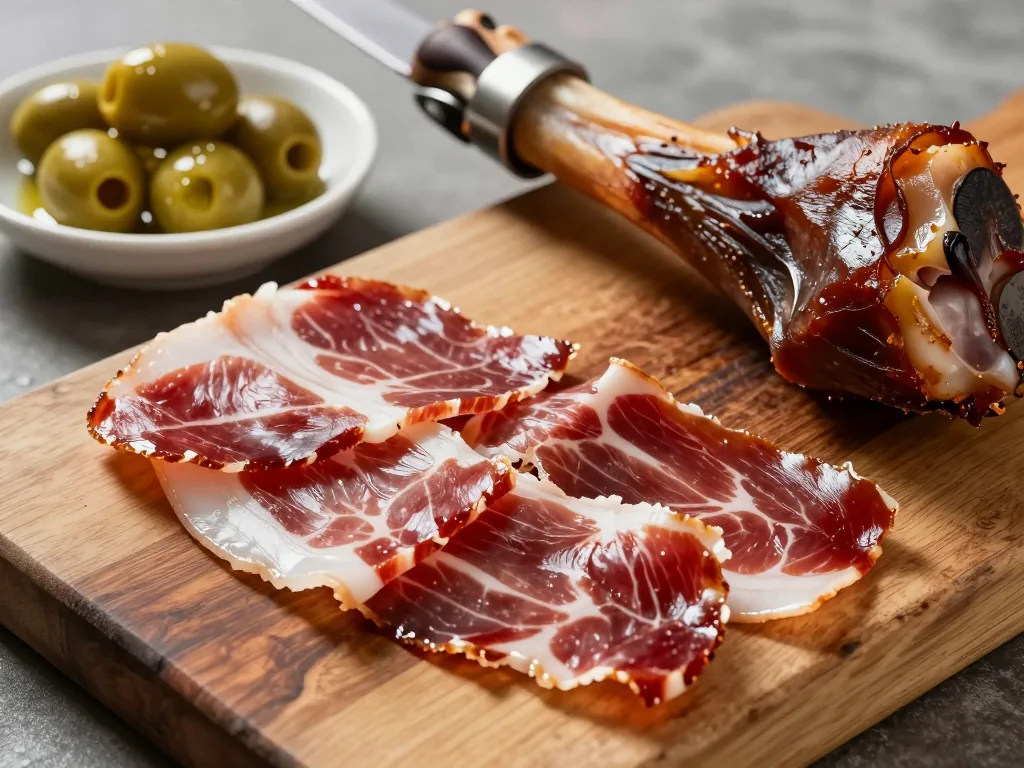
Few foods inspire such reverence—or confusion—as jamón ibérico, Spain’s prized black-hoofed delicacy. By 2026, its labeling, curing standards, and tasting culture have shifted dramatically. New EU regulations refine the grades; artisanal producers push longer cure times; a global boom in high-end charcuterie makes the landscape richer and more nuanced than ever. This guide cuts through the jargon. It explains what separates a $30 supermarket slice from a $300 masterpiece, how to read the new color-coded labels, and the precise hand-slicing and pairing techniques that unlock its full nutty, buttery potential. In the end, you’ll order with confidence. More importantly, you’ll know when to let the jamón speak for itself—and when to intervene with a glass of oloroso.
What Makes Jamón Ibérico Different from Other Hams
To grasp the chasm between jamón ibérico and every other cured ham on the planet, abandon the idea that all ham is pork. Jamón ibérico is not simply a cut; it is a testament to a specific animal, a landscape, and a seasonal rhythm. Standard serrano ham comes from white pig breeds. Jamón ibérico, by contrast, comes exclusively from the Iberian pig—a dark-skinned, often black-hoofed animal with a genetic predisposition for something remarkable: storing fat intramuscularly, not just around the muscle. That is the “marbling” connoisseurs obsess over, and it is the single most important factor separating a transcendent slice from a merely salty one.
The Iberian Pig Breed and Its Unique Fat
The Iberian pig’s fat is biochemically distinct. Rich in oleic acid—the same monounsaturated fat found in olive oil—it melts at a lower temperature than regular pork fat. Place a slice on your tongue, and the fat doesn’t feel greasy or waxy; it dissolves into a silky, nutty essence. That is why a properly cured ibérico ham can be eaten in thick, generous slices without ever becoming cloying. Genetic purity matters too. A 100% ibérico ham (often labeled puro or 100% ibérico) carries two copies of the gene promoting this fat profile. Crossbred pigs (ibérico crossed with Duroc) still produce good ham, but the fat will be firmer and less aromatic. In 2026, strict labeling laws require the percentage of ibérico lineage to be stated on the black or red label, so you always know exactly what you’re buying.
The Dehesa Ecosystem and the Montanera Season
Genetics alone, however, are not enough. The other half of the equation is the dehesa—a vast, oak-studded pastureland found primarily in southwestern Spain (Extremadura, Andalucía, and Salamanca). This is not a farm; it is a managed ecosystem where pigs roam freely, rooting for grasses, tubers, and, crucially, acorns. The magic happens during the montanera, the final fattening phase running roughly from October to February. During this period, a pig destined for the highest grade (bellota) must consume a diet of at least 50% acorns (though in practice, well-managed herds eat far more). Acorns are rich in starch and sugars, which the pig’s metabolism converts into that prized, sweet, golden fat. Walking miles each day to find acorns also keeps muscle fibers firm and develops a complex, slightly gamey depth. A ham from a pig that never saw a single acorn—only commercial feed—is called cebo; it is a completely different, far less interesting product. The dehesa is not just a source of food; it is the flavor itself. That is why a genuine bellota ham from a single-estate producer can command prices from €150 to €400 per whole leg (7–8 kg) in 2026, while a cebo leg might cost only €40 to €90. You are paying for the land, the season, and the animal’s entire life—not just the curing.
The Official Spanish Grading System in 2026
Standing before a jamón display case, confronted by black, red, green, or white labels, you’re hardly alone. But here’s the good news: since 2014, Spain’s government has enforced a strict, standardized labeling system that cuts through the marketing noise. And in 2026, that system remains the single most reliable way to know exactly what you’re buying. It all hinges on two core criteria: breed purity and diet.
Breed Purity and Diet as the Two Core Criteria
First, genetics. True jamón ibérico must come from the Iberian pig—a dark-skinned, black-hoofed breed native to the Iberian Peninsula. Yet not all Iberian pigs are created equal, and the label must state the percentage of Iberian blood. You’ll see either “100% Ibérico” or a lower percentage (typically 50% or 75%), meaning the pig is a crossbreed with the white Duroc breed. For the highest tiers, 100% Iberian lineage is non-negotiable; it delivers that deep, nutty, melt-in-the-mouth fat that aficionados chase.
Second, diet—which directly dictates flavor and texture. Three possible diets exist: bellota (acorns and wild pasture), cebo de campo (a mix of pasture and grain feed), and cebo (grain feed only). The montanera—the autumn-to-winter period when free-range pigs gorge on acorns in the dehesa, the oak-dotted grassland—is what elevates a ham from good to transcendent. A 100% Iberian pig that has consumed only acorns during the montanera produces fat rich in oleic acid, giving it a glossy, silky sheen and a distinctively sweet, hazelnut finish.
The Four Commercial Labels: Black, Red, Green, and White
These two criteria combine to produce exactly four official labels, which you must memorize:
- Black Label (100% Ibérico Bellota): The pinnacle. This ham comes from a 100% Iberian pig raised free-range and fed exclusively on acorns and pasture during the montanera. Expect the deepest marbling, the most complex aroma, and the richest flavor. In 2026, expect to pay from €120 to €250 per kilogram for this level.
- Red Label (Ibérico Bellota): Still excellent, but the pig is a crossbreed (usually 50% or 75% Iberian) that also foraged on acorns. You get 80% of the black label’s experience at a more accessible price—roughly from €60 to €110 per kilogram.
- Green Label (Ibérico Cebo de Campo): The pig is crossbred and raised outdoors but fed a diet of grain and natural pasture, with no acorn requirement. It’s firm, savory, and a solid everyday option. Prices run from €35 to €60 per kilogram.
- White Label (Ibérico Cebo): The entry level. A crossbred Iberian pig raised indoors on a strictly grain-based diet. It’s mild and simple, best used for cooking rather than fine slicing. You’ll find it from €20 to €35 per kilogram.
Remember: the label is your guarantee. If it doesn’t say “bellota,” it isn’t an acorn-fed ham—no matter what the marketing claims. When in doubt, look for the black or red tag, and always check the fine print on the back for the exact breed percentage.
To navigate the world of jamón ibérico, you first need to decode the term bellota. It translates to “acorn,” but on a label, it’s not a flavor note—it’s a legal and ecological commitment. A jamón can only carry the bellota designation if the pig has spent the Montanera period—typically October through February—roaming freely through the dehesa, the vast, grassy oak woodland of southwestern Spain. During those months, the diet shifts dramatically: from pasture and grains to a concentrated regimen of acorns (both sweet encina and bitter quejigo varieties) and wild herbs. This isn’t supplementary feeding. The pig must consume enough acorns to double its body weight, and the resulting oleic acid—a monounsaturated fat—infiltrates the muscle fibers, creating the signature glossy, marbled sheen and the buttery, nutty richness that defines a true bellota. Crucially, the pig must be free-range; a bellota label is invalid if the animal was confined, no matter what it ate.
The second critical layer is breed purity. You’ll see labels reading 100% Ibérico or Ibérico (the latter covering 50% and 75% crosses, usually with Duroc). This isn’t snobbery; it’s a matter of fat chemistry. A 100% Iberian pig, with its pure genetic line, has a unique ability to deposit intramuscular fat—the hallmark of a great ham—in a more distributed, fine-grained pattern. Crossbred pigs, while still producing excellent bellota hams, tend to lay fat in thicker, external layers, yielding a slightly coarser texture and a less complex aroma. For the purist in 2026, the difference is tangible: the 100% Ibérico offers a more profound, lingering finish, with notes of hazelnut and toasted grass, while the 50% or 75% versions are more accessible, slightly firmer, and often more forgiving on the palate. When you see Bellota 100% Ibérico, you’re looking at the apex—a ham from a pure-bred, free-roaming animal that ate only what the forest provided. Expect to pay a premium: a whole leg ranges from €450 to €900, while a 100-gram pack of sliced ham from a reputable producer runs from €35 to €70.
The Curing Process Step by Step
Great jamón ibérico is not made; it is patiently coaxed into existence. From fresh leg to sliced delicacy, the entire process spans a minimum of 24 to 48 months, with the finest examples resting for over 60. It all begins with the salting phase, a critical, short window of just 6 to 10 days depending on the leg’s weight. The fresh ham is buried entirely in coarse, moist Atlantic sea salt, which draws out excess moisture and starts the preservation process. Salt penetration must be precise: too little invites spoilage, too much masks the delicate nutty sweetness of the acorn. After salting, the legs are removed, washed with warm water to scrub away surface salt, and then hung vertically in cool, humid chambers for the post-salting phase. Lasting 60 to 90 days, this period lets the salt equalize slowly from the exterior toward the bone, gently curing the deep muscle tissue without over-salting the prized outer layers.
Then comes the patient art of drying and aging, which unfolds over 12 to 24 months in vast, naturally ventilated cellars. Here, the hams hang in rows, facing the prevailing winter winds from the north. The cool, dry air slowly desiccates the meat, concentrating its flavors. As spring approaches, temperatures rise, causing the intramuscular fat—the hallmark of ibérico—to sweat and infuse the lean muscle fibers, creating that signature marbling. In the final stretch, the hams move to darker, quieter bodegas for the “cellaring” period, where a thin, protective bloom of beneficial mold develops on the surface, further refining aroma and texture. Throughout, skilled maestros (ham masters) periodically weigh and probe each leg with a thin, sharpened horse-bone needle, sniffing it to monitor the curing progression. This manual, sensory evaluation remains irreplaceable by any machine, ensuring each leg reaches its peak. Expect to invest anywhere from €80 to €350 per kilogram for a fully cured, acorn-fed leg in 2026, with the price reflecting the specific breed, diet, and the sheer time invested in this natural, transformative journey.
How to Read the Label and Avoid Confusion
The single most important skill for any jamón lover is decoding the label before you hand over your money. In 2026, the regulatory framework is stricter than ever, yet confusion still reigns at the deli counter. Let’s cut through it.
Official Terms: “100% Ibérico” vs. “Ibérico”
The black, red, green, or white seal on the leg isn’t decorative—it’s a legal declaration of breed and diet. The gold standard is “100% Ibérico” (often paired with “Bellota”). This means both parents are pure Iberian pigs, and the animal has spent its final montanera (the acorn-feeding season) roaming dehesa pastures. That’s the pinnacle: deep marbling, a glossy, oily sheen, and a nutty, sweet finish that lingers for minutes.
Now, the trap: a label that simply says “Ibérico” (without the “100%”). Under current law, this can legally refer to a pig that is only 50% Iberian, with the other half typically Duroc. These pigs may also be “Bellota” fed, but their fat profile and flavor intensity are noticeably thinner and less complex. The term “Ibérico” alone is a broad umbrella—it can include “Cebo” (grain-fed, no acorn) or “Cebo de Campo” (grain plus some outdoor grazing). If you see just “Ibérico” with a red seal, you’re buying a good but not transcendent ham. With a white seal, you’re buying a commercial, intensively raised product that will be salty and firm, not silky.
The Colloquial “Pata Negra” Myth and What to Look For
Spaniards will casually call any great ham “pata negra,” but the term is folklore, not a guarantee. “Pata negra” literally means “black hoof,” and while pure Iberian pigs do have dark hooves, so do many crossbreeds. In 2026, watching for a black hoof is the fastest way to overpay for a mediocre leg—hoof color tells you nothing about diet or acorn intake.
Instead, look for three concrete things: the breed percentage (must say “100% Ibérico”), the diet (must say “Bellota” for acorn-fed), and the DO (Denominación de Origen) —names like Jabugo, Guijuelo, or Dehesa de Extremadura guarantee a specific terroir. Also, check the curing time printed on the tag. A 100% Ibérico Bellota leg should have cured for at least 36 months, often 42–48. If the label says “24 meses,” you’re holding a young, sharper ham that lacks the umami depth of a properly aged piece. Ignore the black hoof; trust the fine print. For a truly exceptional 100% Ibérico Bellota leg in 2026, expect to pay anywhere from €180 to €350 per kilogram, depending on the DO and the specific producer’s reputation.
The single most consequential decision you’ll make is whether to buy a whole leg or vacuum-sealed slices. A whole leg—7 to 9 kilograms—is the purist’s choice. It offers the full sensory arc of the ham as you carve from the narrower punta to the richer maza, and it protects moisture far better than any pre-cut option. The fat stays creamy; the lean meat remains supple for weeks. But the trade-off is commitment. You’ll need a jamonero, a long flexible knife, and the confidence to slice thinly. Without carving skills, a whole leg can quickly become an uneven, bruised mess.
Pre-sliced, vacuum-packed jamón is no longer a compromise. By 2026, top producers like Cinco Jotas and Joselito use modified-atmosphere packaging that preserves the ham for up to 90 days unopened. Look for slices cut to order by a maestro cortador and packed in a single layer—not shingled stacks that fuse together. The cost difference is real: a whole bellota leg (100% Iberian, acorn-fed) runs €350 to €600, while pre-sliced equivalents cost €80 to €140 per kilogram. For most home buyers, pre-sliced is the smarter buy, unless you entertain often or genuinely enjoy the ritual of carving.
Unopened whole legs rest fine in a cool, dry, dark place (16–20°C) for months. Do not refrigerate them; cold dulls the volatile aromatics. Once you cut in, the clock starts. Cover the exposed surface with a clean cotton cloth or a thin layer of the ham’s own fat—ask your supplier for trimmings—and keep the leg on the stand, cut side down. In high humidity, re-wrap the cloth in butcher paper. In this state, a whole leg holds for 6 to 8 weeks, though flavour peaks in the first three. Never use plastic wrap directly on the meat; it traps moisture and accelerates souring.
Pre-sliced packages are different. Refrigerate at 4–6°C until opening. Once opened, shelf life drops to just 3 to 4 days, so plan accordingly. The enemy is oxidation, not spoilage. To stretch that window, place slices on a plate, cover with a damp—not wet—paper towel, then a layer of cling film. The towel maintains humidity; the film blocks air. Always bring the ham to room temperature 20–30 minutes before serving. Cold fat tastes waxy, and umami notes only unlock around 22°C. If you must freeze slices, do so in single-serving portions wrapped tightly in parchment, then foil. Thaw overnight in the fridge, never in the microwave.
How to Slice Jamón Ibérico Like a Pro
Mastering the slice is where reverence meets skill. You don’t need a $2,000 machine; you need patience, a steady hand, and the right tools. Forget serrated knives—they tear the delicate muscle fibers. Invest in a jamonero (a long, narrow-bladed slicing knife) with a flexible blade, ideally 25 to 30 centimeters long. For the initial cuts near the hoof, a shorter, stiffer boning knife helps you navigate the joint. Your cutting board matters just as much: a purpose-built wooden jamonero stand with a clamp holds the leg firmly at a 45-degree angle, freeing both hands. If you’re using a flat board, wedge a damp cloth underneath to prevent slippage.
The technique is deceptively simple. With the knife nearly parallel to the cut surface, draw long, smooth strokes from the top of the leg downward, following the natural contours of the muscle. Aim for slices that are 5 to 7 centimeters long, no thicker than a coin—translucent, so light passes through them. Never saw; glide. Cut only what you’ll eat within 20 minutes, as exposed flesh oxidizes quickly. When you hit the bone or sinew, switch to the boning knife and trim around it, saving those irregular scraps for cooking.
Serving Temperature and Timing for Maximum Flavor
Temperature is the silent killer of good jamón. Straight from the fridge, the fat turns waxy and the flavors mute. Pull your sliced portions from the leg and let them rest at room temperature (20–22°C) for 10 to 15 minutes before serving. The ideal serving window is 15 to 30 minutes after slicing—this allows the intramuscular fat to soften into a silky glaze, releasing volatile aromatic compounds that taste of acorns, toasted hazelnuts, and sweet earth.
Serve on a pre-warmed ceramic plate, not wood, which absorbs heat and aroma. Lay the slices flat, never folded, so each piece breathes. If you’re preparing for a party, slice in batches: place the first batch on the plate, then slice the second batch while the first rests. Eat with your fingers—never a fork—and pair with a dry, chilled manzanilla sherry or a light Rioja. For a professional touch, drizzle a single drop of arbequina olive oil over each slice just before serving; this amplifies the nutty finish without masking the pork.
Avoid serving straight from a leg that’s been carved hours earlier—re-cut the surface first to expose fresh, moist meat. In 2026, specialty shops and online retailers offer professional slicing classes and even at-home knife sharpening services, ranging from €15 to €40 per session, but the real cost is time: give yourself a full 30 minutes of unhurried slicing to honor the animal and the craft.
Let the jamón breathe. That is the single most important rule. Take the slices out of the fridge 20 to 30 minutes before serving, lay them in a single layer on a warm plate, and wait. The translucent fat will begin to glisten, and the volatile aromas—roasted hazelnuts, cured butter, a whisper of wild herbs—unlock. This is not a garnish; it is the whole point. Do not squeeze lemon over it. Do not drizzle olive oil. And never, ever serve it cold.
In Spain, jamón ibérico gets the reverence of a fine wine, and its only acceptable companions are neutral ones. The gold standard is naked: a single slice, folded once, resting on a warmed ceramic plate. If you must add bread, choose a plain, crusty baguette or pan de cristal—crisp, airy, and free of salt or butter. The bread is a vehicle, not a competitor. Seeds, herbs, or sourdough tang will bulldoze the delicate nuttiness of the acorn-fed fat. A few unsalted Marcona almonds on the side are fine. The goal is to taste pata negra, not the accompaniments.
For drinks, the classic is bone-dry, chilled fino or manzanilla sherry. Its salty, yeasty edge cuts the fat and resets your palate for the next slice. A light, crisp Albariño or a young, unoaked Rioja also works. If you prefer red, choose a low-tannin Tempranillo with bright acidity—Crianza, not Reserva. For something more decadent, a vintage cava or dry oloroso brings out the sweet, caramelized notes.
What you avoid matters just as much. Tannic, heavy reds like Cabernet Sauvignon or Syrah will clash violently with the fat. Skip beer, especially hoppy IPAs; the bitterness and carbonation scrub away the subtle flavors. And avoid anything sweet—sweet vermouth, fruity cocktails—which will make the jamón taste salty and metallic. The right drink is a bridge, not a wall. For a non-alcoholic option, try still mineral water at room temperature (iced water numbs the taste buds) or a light, unsweetened green tea. Serve the jamón at room temperature, the drink slightly cooler, and you will taste Spain’s greatest culinary treasure exactly as intended.
Common Mistakes and Practical Tips for Beginners
Overchilling, Drying Out, and Wrong Cutting Direction
The most frequent error newcomers make is serving jamón straight from the refrigerator. Chilled fat turns waxy and opaque, muting the nutty, buttery aromas that define a great ibérico. Always bring your portion to room temperature—ideally 20–24°C—for at least 30 minutes before slicing. Equally damaging is leaving the cut surface exposed to air for hours. Once you slice into the leg, the exposed meat oxidizes rapidly, turning gray and losing its delicate moisture. Cover the cut face with a thin layer of its own fat (save the trimmings) or a clean, damp cloth, and never plastic wrap, which traps humidity and accelerates spoilage.
Cutting direction is another beginner trap. You must slice against the grain, perpendicular to the muscle fibers, in long, sweeping strokes from the narrow (pata) end toward the wider (caña) end. Cutting parallel to the fibers produces chewy, stringy shards instead of the silky, melt-in-the-mouth ribbons that should fan across the plate. Use a flexible, narrow-bladed slicing knife (cuchillo jamonero) and a sturdy stand—a cheap carving board will wobble and ruin your rhythm. And never, ever slice more than you plan to eat within 15 minutes; pre-cut jamón dries out twice as fast.
How to Salvage a Drying Leg and Extend Its Life
If your cut surface has already dried into a darker, firmer layer, don’t panic. Use a sharp knife to trim away a thin, 2–3 mm layer of the discolored meat until you reach the moist, ruby-red interior. This is not waste—those trimmings are perfect for scrambling into eggs, folding into a tortilla, or simmering in a bean stew. To extend the leg’s life for weeks, keep it well-wrapped in a breathable cotton cloth (or the original bag) in a cool, dark place between 15–18°C—not the fridge. If you live in a warm climate, wrap it tightly in cling film and refrigerate, but always allow it to return to room temperature before slicing.
When you reach the final third of the leg, the remaining meat is thinner and dries faster. Flip the leg so the cut face points downward onto a small plate—this seals it with its own fat and slows evaporation. You can also coat the exposed surface with a few drops of olive oil before re-wrapping. For the last scraps, don’t fight the bone; chop the remaining meat and use it as a flavor bomb in rice dishes or soups. A well-managed leg can last two to three months, and the final weeks often yield the most intensely concentrated, savory bites.
Understanding jamón ibérico isn’t about memorizing labels; it’s about appreciating a craft refined over generations, from the acorn-fed dehesa to the careful curing of each leg. The key takeaway for 2026: the grade on the tag is just the beginning. Real expertise lies in recognizing how breed, diet, and curing time shape texture and flavor on your palate. You might be drawn to the bold intensity of a 100% ibérico bellota, or prefer the approachable richness of a cebo. Either way, the next step is straightforward—source a leg from a trusted producer, slice it thin at room temperature, and let the marbled fat melt slowly on your tongue. Now that you understand the anatomy of excellence, invest in a proper jamonero and knife, and let your first truly informed tasting set a new benchmark.