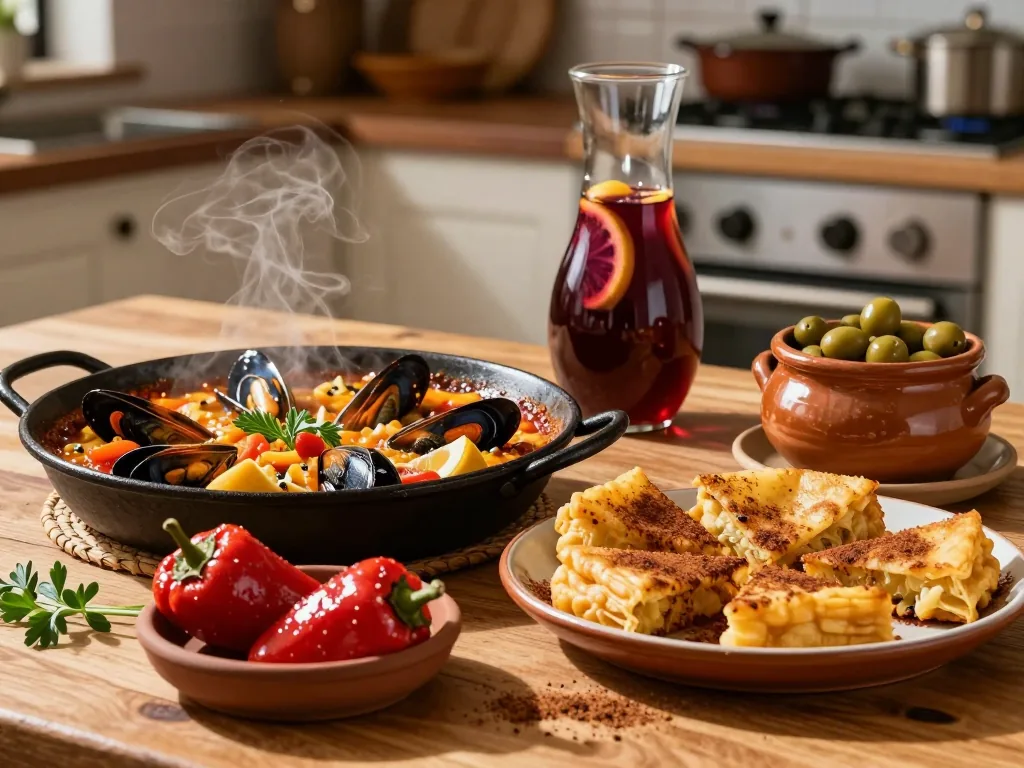
Spain’s culinary scene thrives far beyond paella and tapas. Though iconic, these dishes only scratch the surface of the country’s rich food culture. This guide invites you to explore Spain’s hidden regional specialties—each offering a taste of the nation’s diverse gastronomy. Expect everything from robust mountain stews to delicate seafood, uncovering the authentic flavors that make Spanish cuisine unforgettable.
The Essence of Spanish Cuisine
Spain’s culinary landscape mirrors its geography, offering a rich tapestry of flavors far beyond paella and tapas. To grasp Spanish food, explore its regional diversity and historical influences, which together create a vibrant gastronomy.
Regional Diversity
Spain’s culinary regions are shaped by unique landscapes, climates, and local ingredients. The north boasts lush greenery, with the Basque Country and Galicia serving up hearty dishes like pintxos and pulpo a la gallega—fresh seafood and robust wines dominate here. Inland regions, such as Castilla y León, favor rustic, meat-heavy fare, including cocido, a slow-cooked stew perfect for colder climates. The Mediterranean coast of Valencia and Catalonia offers lighter, vegetable-forward dishes like arròs a la cassola and escalivada.
Southern Spain blends seafood and desert-like landscapes, introducing bold flavors in dishes like gazpacho and espinacas con garbanzos, both showcasing fresh, seasonal produce. Each region’s cuisine reflects its environment—coastal areas emphasize seafood, inland regions prioritize meats and legumes, and mountainous areas incorporate game and hearty grains.
Historical Influences
Spanish cuisine has been shaped by centuries of cultural exchange. The Romans introduced techniques like olive oil production and winemaking. The Moorish occupation of Al-Andalus (8th to 15th centuries) left a lasting mark, particularly in the south, with dishes like tajines and spices such as saffron and cumin becoming staples. Jewish influences appear in adafina, which later evolved into the Christian cocido.
Colonial expansion brought new ingredients from the Americas—tomatoes, potatoes, peppers, and cocoa—revolutionizing Spanish cooking. These ingredients seamlessly integrated into dishes like patatas bravas and churros con chocolate. Over time, Spanish cuisine has absorbed influences while maintaining its regional identity, resulting in a tradition that is both deeply rooted and endlessly inventive.
Hearty Stews and Comfort Food
Spain’s rich culinary landscape extends far beyond paella and tapas, offering hearty stews and comforting dishes that reflect the country’s regional diversity and deep traditions.
Cocido Madrileño
Madrid’s Cocido Madrileño is a robust chickpea stew embodying Spanish comfort food. The dish combines chickpeas with meats like morcilla, chorizo, ham, or pork rib. Served in courses, the broth comes first, followed by tender meats, and finally chickpeas with vegetables such as cabbage, carrots, and potatoes. While regional variations exist, the Madrid version remains the most iconic.
Best enjoyed in winter, Cocido Madrileño warms up chilly days. A traditional Sunday or festive lunch in Madrid, it’s best savored at family-run restaurants or mesones where recipes have been perfected over generations.
Fabada Asturiana
From northern Asturias, Fabada Asturiana highlights Spain’s appreciation for simple, high-quality ingredients. Large, creamy white beans (fabes) are slow-cooked with compango—a mix of morcilla, chorizo, and lacón (salted pork cheek or shoulder). The beans absorb the rich, smoky flavors, creating a deeply satisfying dish.
Traditional preparation is key: beans are soaked overnight, then simmered for hours in a clay pot to thicken the broth. Served in a deep bowl, it’s often garnished with Spanish olive oil and paired with crisp Asturian white wines like Alvarinho or Caská.
Both Cocido Madrileño and Fabada Asturiana are more than meals—they’re cultural experiences. Whether enjoyed in Madrid’s bustling restaurants or Asturias’ quiet villages, these dishes remind us that the best comfort food is rooted in tradition and care.
Cold and Refreshing Dishes
Spain’s culinary landscape mirrors its vibrant culture, and among its most refreshing offerings are cold dishes that thrive under the Mediterranean sun. These aren’t just about cooling down—they capture the essence of Spain’s fresh produce, bold flavors, and regional diversity.
Gazpacho
Gazpacho, the iconic Andalusian chilled soup, embodies simplicity and freshness. Made traditionally with ripe tomatoes, cucumbers, green bell peppers, garlic, olive oil, and vinegar, it’s a summer staple offering a crisp, tangy, and slightly spicy palate cleanser. Regional variations add unique twists: Seville’s gazpacho blanco features almonds, grapes, and garlic, while Granada’s watermelon gazpacho brings a sweet, refreshing note. Modern chefs experiment with avocado, strawberries, or even cava for a bubbly, sophisticated take.
For the perfect homemade gazpacho, use the freshest ingredients—overripe tomatoes yield the best flavor. Blend everything until smooth, then strain for a silky texture. Finish with a drizzle of high-quality extra virgin olive oil and a sprinkle of sea salt. Serve chilled, garnished with diced cucumber, croutons, or a hard-boiled egg for added texture.
Ensalada Malagueña
From Málaga, Ensalada Malagueña is a unique, hearty salad balancing sweet, salty, and tangy flavors. Key ingredients include sweet Malagueña oranges, lettuce, olives, hard-boiled eggs, sardines (or tuna), and anchovies. The citrusy sweetness of the oranges, the briny depth of the olives and fish, and the richness of the egg create a light yet satisfying dish.
To achieve the right balance, use ripe, juicy oranges and fresh lettuce as the base. Opt for high-quality sardines or tuna, and use anchovies sparingly to avoid overpowering the flavors. A light dressing of olive oil and vinegar ties everything together without masking the natural tastes. This salad works as a starter or a light meal, showcasing Andalusia’s coastal bounty.
These cold dishes are more than refreshing—they showcase Spain’s ability to turn simple ingredients into unforgettable flavors.
Seafood Specialties
Spain’s coastal regions boast seafood delights far beyond paella and tapas. Two standout dishes highlight the country’s maritime abundance: Pulpo a la Gallega and Zamburiñas a la Plancha, both showcasing authentic Galician flavors.
Pulpo a la Gallega
A Galician staple, this dish celebrates tender octopus with simplicity and precision. The secret lies in choosing the right octopus—fresh, firm, and ideally wild-caught. Traditionally, it’s boiled whole after freezing and thawing for tenderness. Some cooks add a bay leaf, sea salt, or a potato to the water for extra flavor and texture. Once cooked, the octopus is sliced into even, bite-sized pieces.
Authentic presentations keep it minimal. Arrange the octopus on a wooden board or ceramic plate, drizzle with high-quality olive oil, and sprinkle with smoked Spanish paprika (pimentón) and coarse sea salt. Serve with crusty bread, especially pan de maíz (cornbread), or boiled potatoes. Often paired with a glass of crisp Albariño wine, this dish balances richness and freshness.
Zamburiñas a la Plancha
Zamburiñas, small sweet scallops from the Galician coast, are a coastal treasure. Their tender flesh and delicate flavor make them a favorite in seafood markets. For the best results, choose bright, firm scallops with no off smells.
The simplest way to cook them is grilling or pan-searing (a la plancha). Lightly season with salt and pepper, then cook over high heat for a minute or two per side to avoid overcooking. Some chefs add white wine or garlic-infused olive oil for depth. Authentic preparations skip heavy sauces, letting the scallops’ natural sweetness shine. Serve with sautéed garlic spinach, roasted bell peppers, or a squeeze of fresh lemon.
For the freshest catch, visit seafood markets in coastal towns like Vigo or A Coruña. Whether enjoyed as part of a seafood feast or alone, Pulpo a la Gallega and Zamburiñas a la Plancha offer a true taste of Spain’s hidden culinary gems.
Iconic Spanish Staples
Spain’s culinary identity extends far beyond paella and tapas, with several iconic staples that showcase the country’s rich gastronomic heritage. Among these, Tortilla Española and Pan con Tomate stand out as timeless classics that every food lover should explore.
Tortilla Española
This thick, savory omelet is a cornerstone of Spanish cuisine. Known simply as “tortilla,” its classic version features eggs, potatoes, and sometimes onions, though modern twists now include chorizo, mushrooms, or truffles. The secret to an authentic Tortilla Española lies in its texture—creamy inside with a golden, slightly crispy exterior. Achieving this requires starchy potatoes and slow cooking over low heat, allowing the eggs to set gently without overcooking. Purists insist on flipping the tortilla with a plate to preserve its structure, while others prefer baking it for an even finish. Regardless of the method, the result should be a harmonious blend of flavors and textures that captures the simplicity of Spanish home cooking.
Pan con Tomate
A Catalan staple, Pan con Tomate—or “bread with tomato”—is deceptively simple yet deeply flavorful. It consists of toasted rustic bread rubbed with ripe tomatoes, garlic, and a drizzle of olive oil, often finished with a sprinkle of salt. Regional variations exist, with some omitting garlic or adding smoked paprika for extra depth. In Barcelona, it’s a common breakfast or snack, while elsewhere in Spain, it pairs with charcuterie or seafood. The best versions use freshly baked bread and just-ripe tomatoes, balancing acidity and sweetness. For a true Spanish experience, enjoy Pan con Tomate with jamón ibérico, manchego cheese, or anchovies. Its versatility makes it an ideal starter, offering a taste of Spain’s Mediterranean roots in every bite.
These dishes may not be as famous as paella or tapas, but they are beloved by locals and offer a deeper understanding of Spain’s culinary soul.
Sweet Endings
Spain’s desserts provide a delicious finale to any meal, blending rich flavors with deep-rooted traditions. Two standout examples are Crema Catalana and Tarta de Santiago.
Crema Catalana offers a distinct twist on crème brûlée, shaped by Catalan ingredients and techniques. It starts with heavy cream, egg yolks, sugar, and citrus zest, often enhanced by cinnamon or vanilla. The cream is slowly infused with these flavors, then thickened gently before being poured into ramekins to set. A kitchen torch or hot broiler caramelizes the sugar topping, creating a crisp, golden layer that contrasts with the velvety custard beneath. For an authentic touch, serve in earthenware dishes with a dusting of ground cinnamon or lemon zest. The crema should be chilled but not too cold, highlighting its rich, creamy texture.
Tarta de Santiago, named after Spain’s patron saint, carries deep historical and cultural ties, especially in Galicia. This almond-based cake dates back to medieval times when almonds were plentiful in the region. Made with ground almonds, sugar, eggs, and sometimes brandy or sherry, it yields a dense, moist cake with a delicate crumb. A cross of Saint James is often etched into the top with powdered sugar, honoring its religious roots. For the most authentic experience, bake it in a round mold, ensuring the almond flavor is noticeable but balanced. Pair it with café con leche or a glass of sweet Galician wine for the full experience.
These desserts embody Spain’s culinary diversity, where regional ingredients and traditions create unforgettable flavors. Whether enjoyed in a Catalan farmhouse or a Galician tavern, they offer the perfect sweet ending to any Spanish meal.
Conclusion
Spain’s culinary landscape is far richer and more diverse than most realize. Beyond the familiar paella and tapas, each region offers distinct dishes—from the robust cocido to the delicate marmitako—each with its own story. These hidden gems reveal the true essence of Spanish cuisine. For food lovers and curious travelers alike, they’re an experience not to be missed. So start planning your adventure and discover the delicious secrets Spain has to offer.